
How to Analyze and Improve Trading Psychology for Better Forex Performance with MT4/MT5
Why Analyzing Trading Psychology Is Essential for Forex Traders
Many forex traders believe success depends solely on finding the right strategy, indicator, or Expert Advisor (EA) for MT4 or MT5 platforms. They spend hours searching for better entry signals, refining technical analysis, and testing new automated trading systems.
However, experienced traders know the biggest challenge is not just spotting market opportunities but managing your own emotions and decisions effectively.
Trading psychology plays a crucial role in every trading decision. Emotions like fear, greed, impatience, revenge trading, overconfidence, and hesitation can drastically affect the outcome of even the most profitable forex trading strategies.
It’s possible to have a winning MT4/MT5 strategy but still lose money due to poor psychological decisions.
Therefore, analyzing your trading psychology should be a regular part of your trading routine for consistent forex performance.
Just like professional athletes review their performance after every competition, traders should review their decisions, mistakes, and behaviors after each trading period.
- Am I consistently following my trading plan?
- Am I risking an appropriate amount per trade?
- Do I close winning trades too early?
- Do I hold losing trades too long?
- Do I trade emotionally after losses?
- Am I improving compared to previous months?
Regular analysis helps ensure you’re moving in the right direction and not repeating costly mistakes.
Why Trading Psychology Matters More Than Many Traders Realize
Trading involves uncertainty and risk in every decision.
Even the best MT4/MT5 Expert Advisors and automated trading strategies will experience losses.
The key difference between successful and unsuccessful traders is often how they handle these losses.
Common Trading Psychology Challenges to Monitor
1. Overtrading
Overtrading occurs when traders open too many positions without valid setups.
Typical causes include:
- Trying to recover losses quickly
- Fear of missing out on opportunities
- Trading without clear signals
2. Increasing Risk After Losses
Some traders increase their lot size after losses to recover faster, creating a dangerous cycle:
| Event | Action |
|---|---|
| Loss | Bigger Position |
| Bigger Position | Bigger Loss |
| Bigger Loss | Emotional Decisions |
3. Closing Winning Trades Too Early
Many traders exit profitable trades prematurely due to fear of market reversals, reducing their average reward per trade.
4. Holding Losing Trades Too Long
Refusing to accept losses and holding losing positions hoping the market will reverse can severely damage your trading account.
Monthly Trading Psychology Analysis: Why It’s Crucial
Improvement requires measurement.
Without reviewing your performance regularly, you can’t track progress or identify recurring mistakes.
- Behavior from previous months
- Risk management adjustments
- Emotional control improvements
- Consistency in following your trading plan
| Month | Average Losing Trade | Average Winning Trade | Overtrading Incidents |
|---|---|---|---|
| January | $80 | $120 | 15 |
| February | $60 | $150 | 5 |
This data clearly shows improvement.
How to Export Your MetaTrader MT4/MT5 Trading History for Analysis
To analyze your trading psychology effectively, you need your actual trading history from MetaTrader platforms.
MetaTrader 4 and MetaTrader 5 allow easy export of trading reports:
Step 1: Open MetaTrader History
Navigate to Terminal → History in your MetaTrader platform.
Step 2: Generate Trading Report
Right-click inside the History section and select Report → HTML.
This creates an HTML file containing your detailed trading activity for review.
Visual Guide: Export MetaTrader Trading History
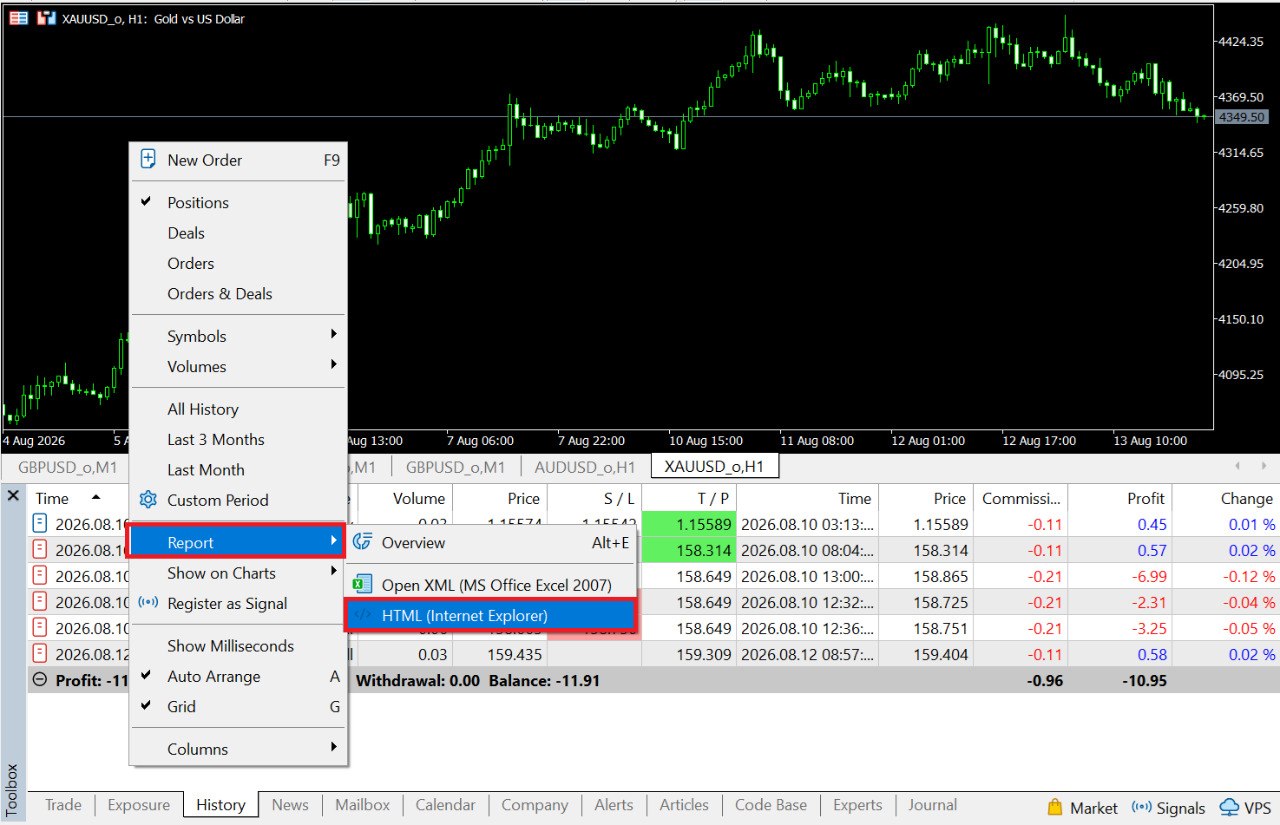
This visual aid helps traders export their history correctly before analysis.
Introducing the TradiCoders Trade Psychology Meter for Forex Traders
To simplify trading psychology analysis, TradiCoders offers a free tool called the Trade Psychology Meter.
This tool lets traders upload their MetaTrader trading history and receive an automated analysis of their trading behavior.
Access the tool here:
https://www.tradicoders.com/forex-tools.php
How the Trade Psychology Meter Works
- Export your MetaTrader trading report as an HTML file.
- Upload the report to the TradiCoders Trade Psychology Meter.
- The tool analyzes your trading activity and generates your performance profile.
- Save monthly reports to track your progress over time.
Example Trade Psychology Analysis
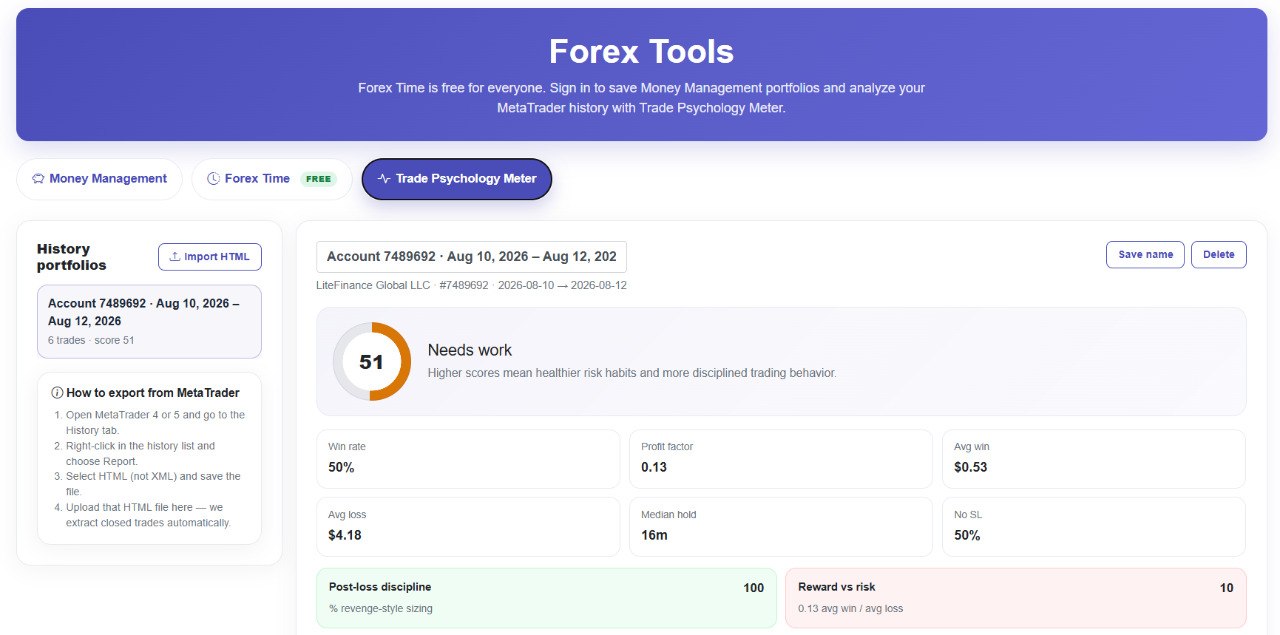
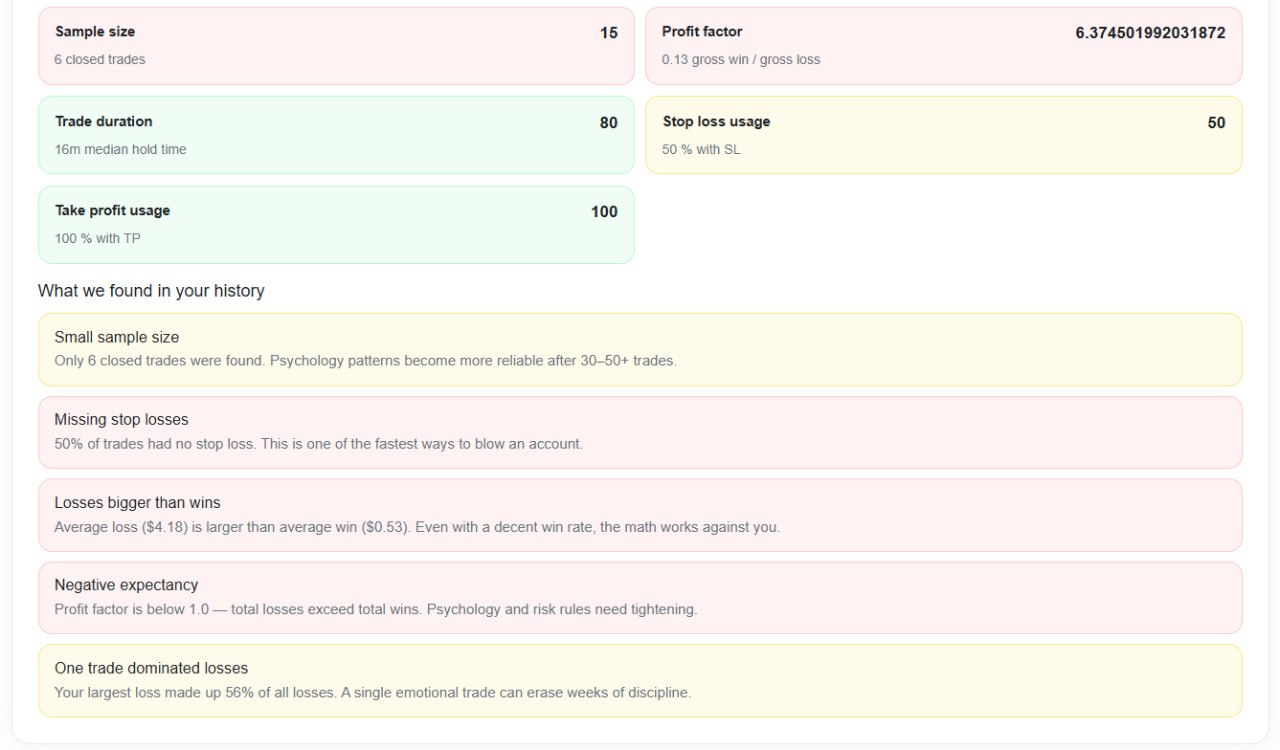
This example highlights:
- Trading behavior patterns
- Risk management evaluation
- Winning and losing trade analysis
- Psychological weaknesses
- Suggestions for performance improvement
Key Insights Traders Gain From Trading Psychology Analysis
Risk Management Behavior
Are you risking too much relative to your account size?
Trading Discipline
Do you consistently follow your MT4/MT5 strategy’s rules?
Loss Management
How do you respond after losing trades?
Profit Management
Are you letting winning trades run to their targets?
Trading Frequency
Are you trading too frequently or impulsively?
Combining Trading Psychology and Technology for Faster Forex Improvement
Modern traders have access to powerful tools such as:
- Advanced MT4/MT5 trading indicators
- Expert Advisors (EAs) for automation
- Backtesting platforms
- AI-powered MQL5 code analysis
- Performance tracking software
Yet, the most important tool remains self-awareness.
Understanding your psychological strengths and weaknesses accelerates your growth more than endlessly searching for new strategies or EAs.
Technology can analyze your data, but real improvement comes from applying those insights consistently.
Final Thoughts on Trading Psychology for Forex Success
Trading psychology is a critical component of becoming a consistently profitable forex trader.
Your MT4/MT5 strategy may signal when to enter and exit trades, but your psychology determines whether you follow those signals effectively.
Top traders regularly review their performance and seek ways to improve their mindset and discipline.
By analyzing your trading history monthly, identifying emotional mistakes, and tracking progress, you can develop stronger discipline and better trading habits.
Yourself, the trader.


